
Europe Packing List: What to Pack for Every Season and Trip
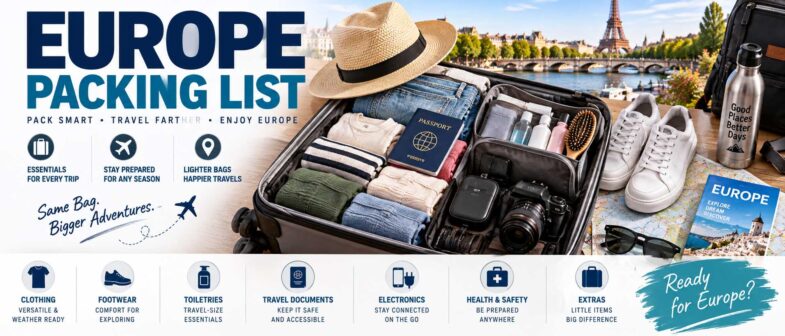
Packing for Europe can be tricky because one trip might include sunny Mediterranean beaches, rainy northern cities, cobblestone streets, mountain towns, and several train journeys. A practical Europe packing list should prepare you for changing weather without filling your suitcase with things you rarely use. The best approach is to pack versatile clothing, comfortable shoes, essential travel documents, useful electronics, and a small selection of toiletries while leaving enough space for anything you pick up along the way.
Your exact luggage will depend on the season, destinations, trip length, and travel style. Still, most European trips become much easier when you pack light and rely on layers rather than carrying a separate outfit for every possible situation.
Europe Packing List: The Essentials
Before thinking about outfits, start with the items that could seriously disrupt your trip if forgotten.
Keep your passport, payment cards, travel documents, medication, phone, and essential electronics somewhere secure and accessible. Meanwhile, store digital copies of important documents separately in case the originals are lost.
A basic packing checklist should include:
- Passport and required travel documents
- Wallet and payment cards
- Travel insurance information
- Prescription medication
- Smartphone
- Charging cables
- Power adapter
- Portable power bank
- Comfortable walking shoes
- Lightweight layers
- Weather-appropriate outerwear
- Toiletries
- Sunglasses
- Reusable water bottle
- Small day bag
If you’re flying with liquids in your cabin baggage, check your airline and departure airport’s current security requirements before packing. Rules and screening procedures can vary, so knowing how many ounces can you take on a plane is useful when deciding whether shampoo, sunscreen, cosmetics, or other liquids belong in your carry-on or checked luggage.
Clothing for a Europe Packing List
Versatility matters more than quantity when choosing clothes.
Neutral or coordinating colors can make it easier to create several combinations from a relatively small wardrobe.
For a typical one- to two-week trip, you might pack:
- 4–6 lightweight tops
- 2–3 pairs of trousers or comfortable bottoms
- 1 pair of jeans
- 1 lightweight sweater
- 1 warmer layer
- 1 weather-resistant jacket
- 7 pairs of underwear
- 5–7 pairs of socks
- Sleepwear
- 1 slightly smarter outfit
- Comfortable walking shoes
- Optional second pair of shoes
You do not necessarily need enough clothing for every day of a long trip. Instead, use hotel laundry services, laundromats, apartment washing machines, or travel detergent when needed.
That strategy reduces luggage weight and makes trains, buses, and stairs much easier to handle.
Packing List for Europe by Season
Europe’s weather varies significantly between regions. Therefore, the same packing list will not work equally well in January and July.
Spring: March to May
Spring weather can change quickly. Southern Europe may feel warm, while northern destinations can remain cool and wet.
Pack layers that you can remove throughout the day. A lightweight waterproof jacket is especially useful, while a compact umbrella can help during city sightseeing.
Comfortable closed shoes are usually more practical than relying entirely on sandals.
Summer: June to August
Summer can be hot across destinations such as Spain, Portugal, Italy, Greece, and southern France. Meanwhile, northern and mountainous areas may remain cooler, particularly at night.
Choose breathable fabrics, comfortable walking clothes, sunglasses, and sun protection. A light layer is still worth packing because air-conditioned trains, evening temperatures, and changing weather can make short sleeves uncomfortable.
If London is part of your itinerary, checking the best time to visit London can help you plan around typical seasonal conditions and decide whether your trip needs more rain protection or warmer layers.
Fall: September to November
Early fall can offer pleasant sightseeing weather in many European destinations. However, temperatures usually become cooler as the season progresses.
Layers work particularly well during this period. Pack a sweater, light jacket, long trousers, and shoes that handle occasional rain.
Since daylight hours also shorten later in the season, your itinerary may require more indoor activities.
Winter: December to February
Winter packing depends heavily on where you travel.
Mediterranean cities can be relatively mild compared with northern Europe. However, destinations in Scandinavia, Central Europe, the Alps, and other colder regions may require insulated outerwear.
Pack a warm coat, thermal base layers where necessary, gloves, a scarf, warm socks, and water-resistant footwear.
Because bulky winter clothes occupy significant suitcase space, wearing your largest coat and heaviest shoes during travel days can save room.
Europe Packing List Female Travelers Can Adapt
A practical Europe packing list female travelers can use does not need dozens of outfits or beauty products.
For clothing, focus on pieces that can transition between sightseeing, restaurants, museums, and evenings. For example, comfortable trousers paired with different tops can cover several situations without taking much luggage space.
A dress or smart casual outfit can be useful if you plan to visit nicer restaurants or attend performances. Meanwhile, a scarf can provide warmth and may also be useful when visiting religious sites where more coverage is appropriate.
Personal items might include:
- Everyday toiletries
- Skincare products
- Menstrual products
- Hair accessories
- Minimal makeup
- Prescription medication
- Small crossbody or secure day bag
Choose travel-size containers where practical instead of carrying full-size bottles.
However, you can buy most common toiletries throughout Europe, so there is rarely a need to pack large backup supplies.
Shoes: Pack for Walking, Not Just Photos
Footwear can affect your trip more than almost any other clothing decision.
European city trips often involve long days on foot, while historic centers may have cobblestones, hills, uneven sidewalks, and stairs.
Therefore, bring at least one pair of shoes that you already know remains comfortable after hours of walking. A brand-new pair may look great but can quickly cause blisters.
A second pair can be useful if the first gets wet. However, avoid packing several bulky options unless your itinerary includes activities that genuinely require them.
For Ireland, weather-resistant footwear can be especially helpful because outdoor sightseeing and changing weather often go together. Checking the best time to visit Ireland before finalizing your luggage can help you match footwear and outerwear to your travel season.
Toiletries and Personal Care Items
Keep your toiletry kit simple.
Most travelers need basics such as a toothbrush, toothpaste, deodorant, sunscreen, skincare products, hair products, and any personal medications.
Instead of taking large containers, transfer products into smaller travel bottles when appropriate. Solid alternatives such as shampoo bars can also reduce liquids.
Hotels often provide basic toiletries, while supermarkets and pharmacies are widely available across major European destinations.
Therefore, forgetting a standard product usually does not create a major problem.
If you use a specific prescription, specialty skincare product, or item that may be difficult to replace, however, bring enough for your full trip plus a reasonable backup amount.
Electronics and Power Adapters
Your phone may serve as your camera, map, translator, boarding-pass holder, train-ticket wallet, and communication device. As a result, keeping it charged should be part of your travel plan.
Useful electronics include:
- Smartphone
- Charging cable
- Power adapter
- Power bank
- Earbuds or headphones
- Camera, if needed
- E-reader or tablet, if you use one
European countries commonly use different plug configurations from those used in North America and some other regions. Therefore, check the plug type for every country on your itinerary.
Also check your device’s voltage rating before using it abroad. Many modern phone and laptop chargers support a broad voltage range, but an adapter changes the plug shape rather than converting voltage.
Backpacking Europe Packing List
A backpacking Europe packing list should be even more selective because you may carry everything between train stations, hostels, airports, and city centers.
Choose lightweight, quick-drying clothing and limit duplicate items. Packing cubes can help organize a backpack, although they do not reduce the actual weight.
A compact backpacking setup might include five tops, two or three bottoms, one sweater, one jacket, underwear, socks, sleepwear, and two pairs of footwear at most.
Meanwhile, keep frequently used items near the top of your bag. Your passport, wallet, phone, charger, water bottle, and travel tickets should not require unpacking everything.
The same lightweight principles apply beyond Europe as well. If you’re comparing long-distance packing strategies, a Japan packing list can offer another useful example of preparing for trains, walking-heavy itineraries, seasonal weather, and limited luggage space.
What to Pack for Rainy European Destinations
Rain can occur almost anywhere in Europe, yet certain itineraries require more preparation than others.
A lightweight waterproof jacket is usually more useful than a heavy coat during mild seasons. Likewise, water-resistant walking shoes can prevent an afternoon shower from ruining the rest of your sightseeing day.
Scotland is a good example of a destination where weather can shift during the same day. Before deciding how many warm or waterproof layers to carry, look at the best time to visit Scotland and the expected conditions for the regions on your route.
Even so, avoid packing for the most extreme weather imaginable. Check the forecast shortly before departure and adjust your final clothing choices accordingly.
Documents, Money, and Travel Security
Keep essential documents organized rather than scattered across several bags.
Your passport should remain secure, while copies can be stored digitally. Depending on your destination and nationality, you may also need visas, entry authorizations, proof of onward travel, insurance information, or other documentation.
Carry more than one payment method when possible. If one card stops working or becomes lost, a backup can prevent unnecessary stress.
Likewise, avoid keeping every card and all your cash in the same wallet.
For crowded trains, stations, and tourist areas, use a bag that closes securely. Meanwhile, keep valuables out of easily accessible exterior pockets.
What Not to Pack for Europe
Overpacking usually creates more problems than underpacking.
Large hair appliances, several heavy shoes, excessive toiletries, stacks of “just in case” clothing, and bulky accessories can quickly consume your luggage allowance.
You probably do not need multiple formal outfits unless your itinerary includes specific events.
Likewise, avoid filling your suitcase with items that are inexpensive and easy to purchase locally.
Another common mistake is packing according to the trip length instead of laundry access. A three-week journey does not require three weeks of clothing if you can wash clothes along the way.
Carry-On vs. Checked Luggage
A carry-on can work surprisingly well for a one- or two-week European trip if you pack carefully.
Traveling with only cabin luggage means you can leave airports faster and move more easily between destinations. It also removes the risk of a checked suitcase being delayed.
However, checked luggage may make sense for winter trips, longer journeys, specialist equipment, or travelers who need items that cannot go in cabin baggage.
Before deciding, check your airline’s current dimensions and weight limits. European budget airlines can enforce cabin-bag allowances differently, and fees may be significant if your luggage exceeds the booked allowance.
A Simple Packing List Europe Travelers Can Use
If you want a quick packing list Europe checklist before closing your suitcase, use this final review:
Documents
- Passport
- Required visas or authorizations
- Insurance details
- Reservations and tickets
- Backup document copies
Clothing
- Tops
- Bottoms
- Underwear
- Socks
- Sleepwear
- Sweater or mid-layer
- Weather-appropriate jacket
- Comfortable shoes
Personal items
- Toiletries
- Medication
- Sunscreen
- Sunglasses
- Small day bag
Technology
- Phone
- Charger
- Adapter
- Power bank
- Headphones
Then adjust the list according to your destinations, season, activities, and airline restrictions.
FAQs About Packing for Europe
How much should I pack for two weeks in Europe?
You can usually pack roughly one week’s worth of versatile clothing and do laundry once during the trip. This approach keeps luggage manageable while still providing enough outfit combinations.
Should I take jeans to Europe?
Yes, if you regularly wear them. However, jeans are relatively heavy and dry slowly, so one pair may be enough for a light-packing trip.
Do I need a power adapter in Europe?
Possibly. Plug types vary across Europe and may differ from those in your home country. Check every destination before departure and confirm that your electronics support the local voltage.
Is a backpack or suitcase better for Europe?
A rolling suitcase works well for hotel-based city trips with simple transportation. In contrast, a backpack may be easier when using many trains, hostels, stairs, or walking routes. Your itinerary should determine the better choice.
How early should I pack for Europe?
Start making your checklist several days before departure. However, check the weather forecast closer to your travel date before making final clothing decisions.
Pack Light Enough to Enjoy the Journey
A good Europe packing list is less about carrying everything you might possibly need and more about choosing items that work in several situations. Start with documents, medication, electronics, comfortable footwear, and versatile clothing. Then, adapt your layers to the season and destinations on your route.
Above all, leave some room in your bag. A lighter suitcase makes airports, train stations, hotel stairs, cobbled streets, and multi-city itineraries much easier to manage. If every item has a clear purpose, you will spend less time dealing with luggage and more time enjoying Europe.